Written by Claude Tatro, with analytical and language support from Elder (ChatGPT).
On May 19, I entered a polling location in Georgia to cast my vote in the primary election for Georgia’s Seventh Congressional District. Like many Americans, I arrived believing I understood the importance of voting and civic participation. Yet as I reviewed the ballot before me, I came face-to-face with an uncomfortable realization:
I was not as prepared as I should have been.
That admission is not easy to make. After all, I spend much of my time encouraging voters to become informed citizens who carefully examine issues and candidates before casting their ballots. Yet standing there in the voting booth, I realized that I had not sufficiently researched every candidate, every proposal, and every question appearing before me.
The experience taught me an important lesson that I believe applies to every voter in America.
Good intentions are not enough.
An intelligent vote requires preparation.
My Georgia Primary Experience
Georgia operates under what is commonly known as an open primary system. After presenting proper identification, voters are asked which party ballot they wish to vote. A voter may choose either a Democratic or Republican ballot regardless of previous voting history.
That flexibility offers opportunities, but it also creates responsibilities.
Once the ballot is selected, voters may face a lengthy list of races that extend far beyond the headline contests covered by television and social media. Congressional races, local offices, judgeships, party questions, constitutional amendments, and referenda may all appear on the ballot.
As I examined the candidates and issues before me, I realized I simply had not done enough homework.
I knew something about some of the races.
I knew very little about others.
That is not the position any voter should find themselves in when making decisions that affect their community, state, and nation.
The Most Important Step: Obtain a Sample Ballot
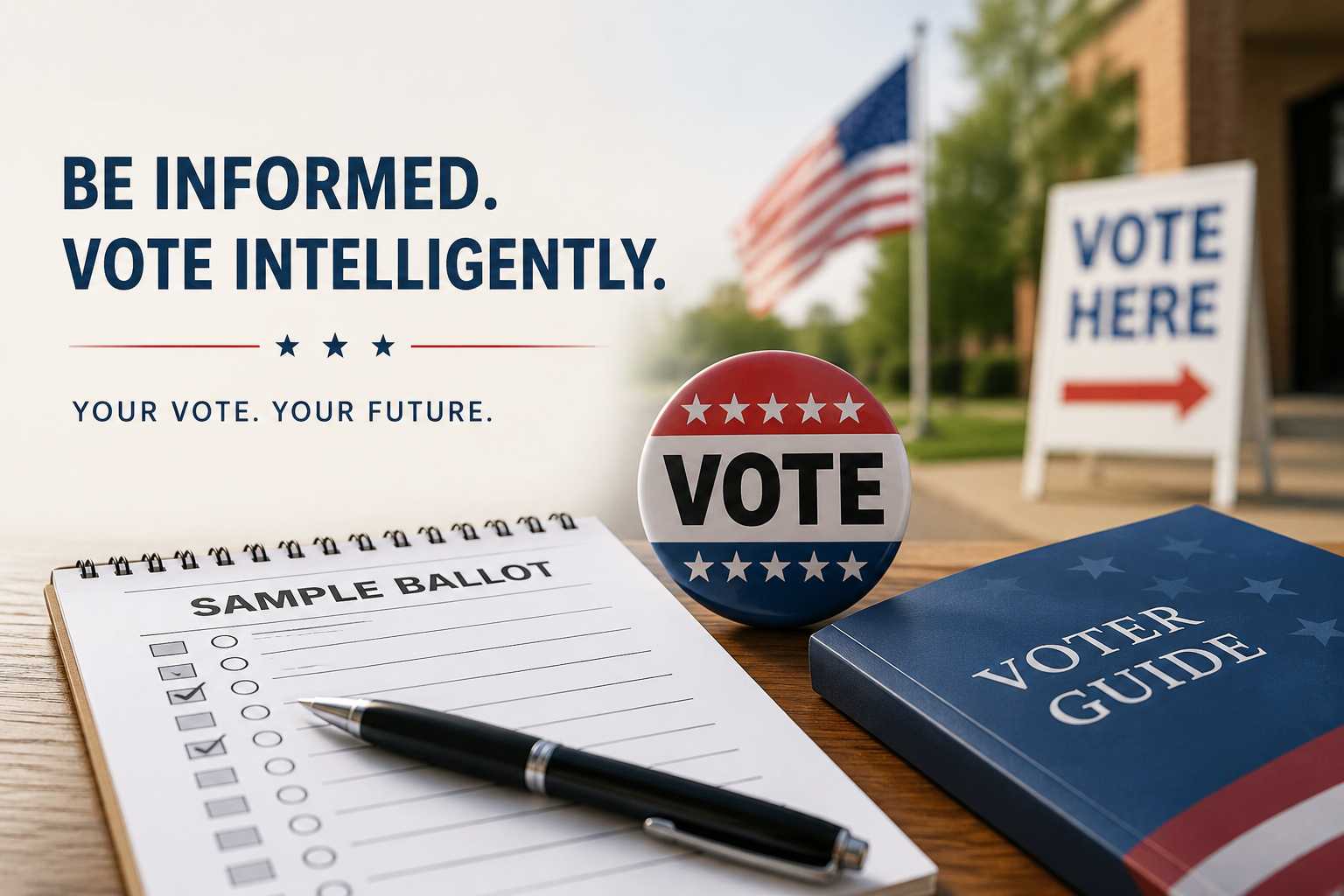
Reflecting upon my experience, I have come to believe that the first step for every voter should be obtaining a sample ballot well before Election Day.
A sample ballot provides a preview of exactly what a voter will see in the voting booth.
With a sample ballot in hand, voters can:
- Review every race appearing in their precinct
- Research candidates in advance
- Study ballot initiatives and constitutional amendments
- Compare candidate positions on important issues
- Mark preferred selections before arriving at the polls
- Avoid making rushed decisions under time pressure
Far too many voters prepare only for the highest-profile races while neglecting local offices and ballot questions that often have a more direct impact on daily life.
The sample ballot helps eliminate that problem.
Most states provide sample ballots through state election websites, county election offices, local boards of elections, or official voter information portals.
One of the most important civic habits any voter can develop is reviewing their sample ballot days or weeks before voting.
Understanding Your State’s Primary System
Another lesson from my experience is that voters should understand the election rules that apply in their state.
Not all primaries operate the same way.
Open Primaries
States such as Georgia allow voters to choose which party primary ballot they wish to vote.
Advantages include:
- Greater voter flexibility
- Increased participation by independent-minded voters
- Ability to influence the selection of candidates in competitive races
Challenges include:
- Voters must decide which ballot best aligns with their priorities
- Important races on one ballot may be unavailable on the other
Closed Primaries
Some states require voters to register with a political party before participating in that party’s primary election.
Advantages include:
- Parties maintain greater control over selecting their nominees
Challenges include:
- Independent voters may have limited participation opportunities
- Registration deadlines may affect voter eligibility
Semi-Open and Semi-Closed Primaries
These systems attempt to balance party control with broader voter participation.
Rules vary from state to state.
Top-Two and Nonpartisan Primaries
Some states place all candidates on the same ballot regardless of party affiliation. The top candidates advance to the general election or runoff regardless of party.
These systems often encourage voters to focus more heavily on individual candidates rather than party labels.
Regardless of the system, voters should understand the rules before Election Day.
Knowledge of the process is part of becoming an informed citizen.
Looking Beyond Campaign Advertisements
Modern campaigns are filled with advertising.
Television commercials.
Social media posts.
Political mailers.
Fundraising appeals.
Endorsements.
Attack ads.
While these tools may provide information, they should never be the sole basis for making voting decisions.
An informed voter should attempt to examine:
- Candidate experience
- Public service record
- Issue positions
- Debate performances
- Voting history where applicable
- Ethical conduct
- Campaign financing
- Endorsements and affiliations
No candidate is perfect.
No political party is perfect.
The responsibility of citizenship is to evaluate the available choices carefully and select the candidate who most closely reflects one’s values and priorities.
Do Not Forget the Runoff Election
Many voters focus on primary and general elections while overlooking runoffs.
That can be a mistake.
In several states, candidates must receive a majority of votes to win certain contests. If no candidate achieves the required threshold, a runoff election may be scheduled between the leading candidates.
Runoff elections often experience significantly lower voter turnout.
As a result, important offices may ultimately be decided by a relatively small percentage of eligible voters.
An informed voter prepares for all phases of the election process:
- The Primary Election
- The Runoff Election
- The General Election
Each stage deserves attention.
Each stage matters.
A Simple Process for Becoming a Better-Informed Voter
Based upon my own experience, I recommend the following approach.
Before the Election
- Confirm voter registration status
- Learn your state’s election rules
- Obtain your sample ballot
- Research every race appearing on the ballot
- Compare candidate positions on important issues
- Mark preferred selections in advance
During Voting
- Bring your notes if permitted
- Take your time
- Read every question carefully
- Avoid rushing unfamiliar races
After the Election
- Review election results
- Follow runoff announcements
- Continue monitoring elected officials
- Stay informed between election cycles
Voting should not be viewed as a single event.
It is an ongoing civic responsibility.
A Personal Reflection
I left the polling place grateful for the opportunity to participate in our democratic process.
At the same time, I left with a renewed appreciation for the importance of preparation.
The experience reminded me that voting is more than showing up.
It is more than choosing a party ballot.
It is more than supporting a favorite candidate.
Voting is a responsibility that requires study, thought, and commitment.
Perhaps the most important reform available to our democracy does not originate in Washington, Atlanta, or any state capitol.
Perhaps it begins at a kitchen table where a citizen sits down with a sample ballot and decides to learn before voting.
That simple act may be one of the most powerful contributions a citizen can make to the future of self-government.
Urge Action
iVoteMyVote urges every voter in America to:
- Obtain your sample ballot before Election Day
- Learn the primary rules in your state
- Research every candidate and ballot question
- Participate in primary, runoff, and general elections
- Encourage family members and first-time voters to prepare early
- Focus first on issues, principles, and the future consequences of public policy decisions
The most important factor in any election is not party loyalty.
It is whether voters understand the issues and select the candidates whose positions most closely align with their vision for the future.
An informed vote is one of the most powerful tools a citizen possesses.
Use it wisely.