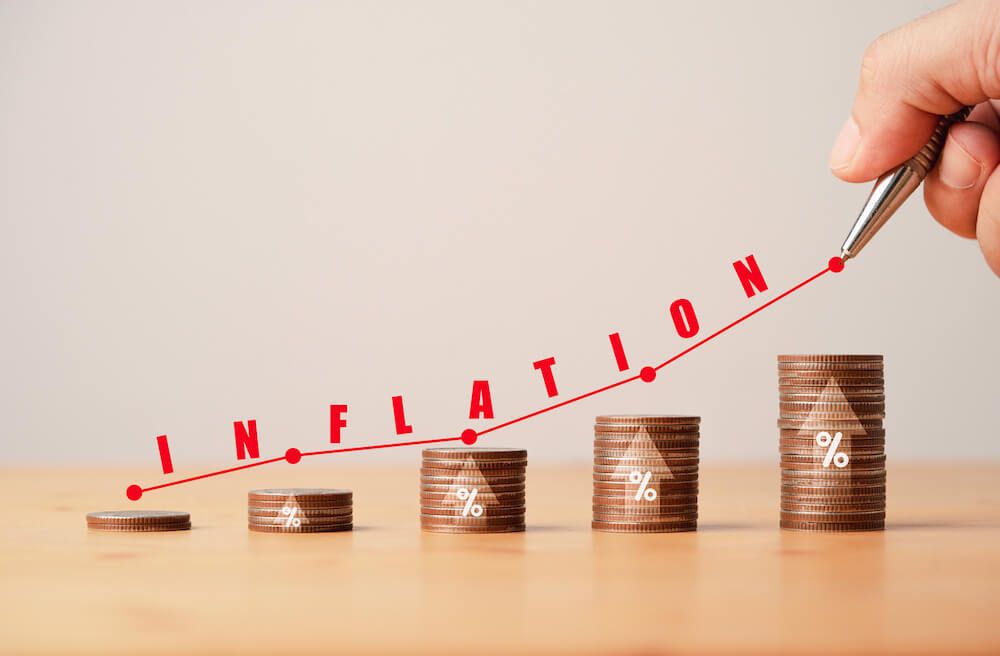
Inflation is usually discussed like a single number scrolling across the news.
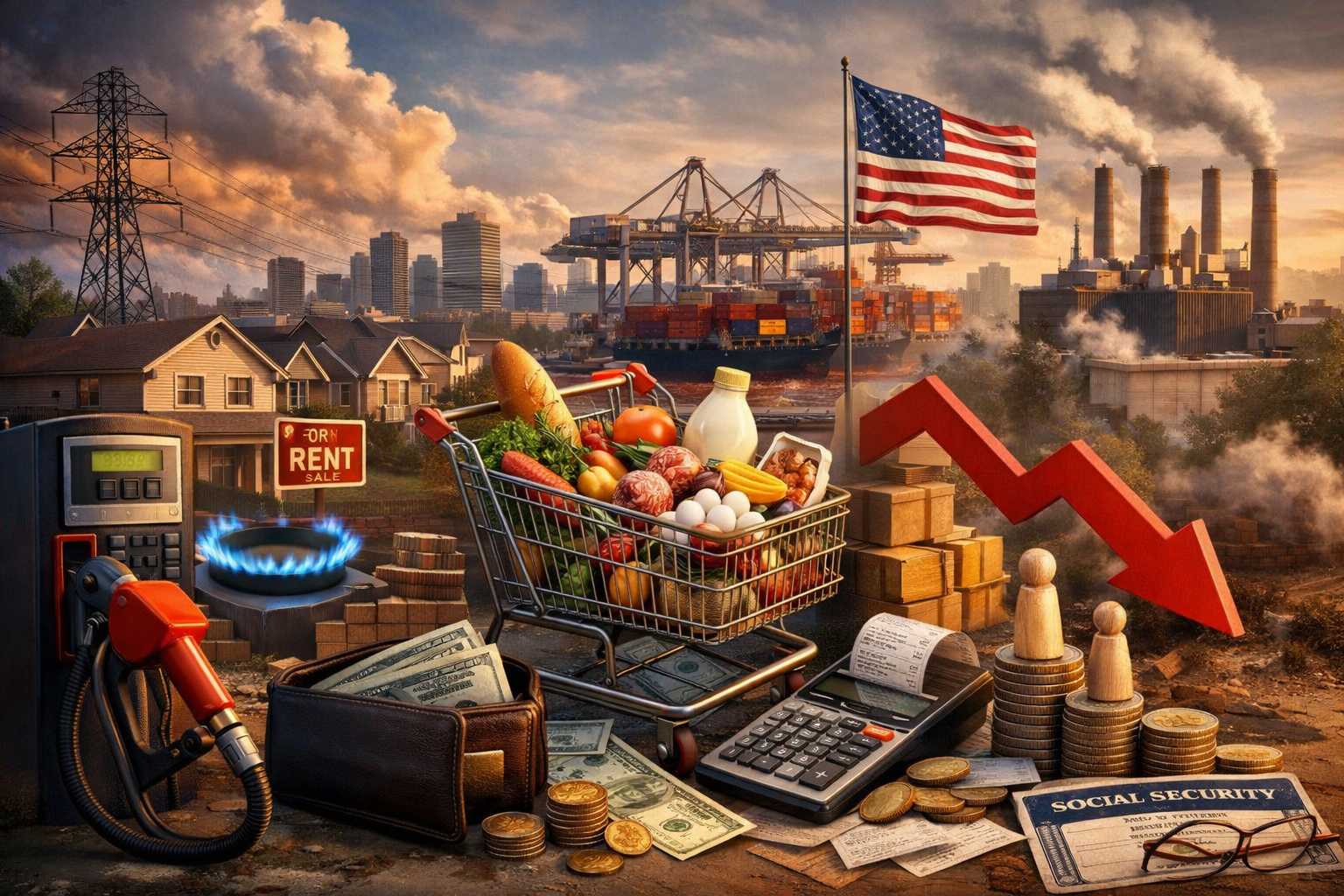
But in real life, inflation shows up as a bundle of pressures housing, energy, food, interest rates, supply shocks, policy decisions, and sometimes tariffs layered on top.
For most households, the experience is painfully consistent:
Prices move first. Paychecks chase later.
Below is a clear, data-based look at inflation from 2015 through the present, why wages often lag, how savings quietly erode, why retirees feel inflation differently and why all of this is as much a civic issue as an economic one.
1) The timeline: inflation stayed tame… until it didn’t
For much of 2015–2020, inflation existed but remained manageable. Then came the sharp post-pandemic surge in 2021–2022, followed by a gradual cooldown that still left prices permanently higher.
U.S. CPI inflation (annual)
| Year | CPI Inflation |
|---|---|
| 2015 | 0.1% |
| 2016 | 1.3% |
| 2017 | 2.1% |
| 2018 | 2.4% |
| 2019 | 1.8% |
| 2020 | 1.2% |
| 2021 | 4.7% |
| 2022 | 8.0% |
| 2023 | 4.1% |
| 2024 | 2.9% |
| 2025 (est.) | 2.7% |
What this means:
The inflation shock was not a slow climb it was a sudden jump concentrated in a short window. Even when inflation later “cooled,” prices did not return to prior levels. Households absorbed the increase permanently.
2) Why wages lag inflation and why that lag hurts
Wage growth does not respond in real time to price shocks. That lag is structural, not imagined.
Why paychecks don’t adjust quickly
-
Annual review cycles delay adjustments
-
Contracts and budgets lock in pay
-
Sticky wages rise slower than prices
-
Uneven bargaining power favors some workers over others
The result is a gap between nominal wages (the number on your paycheck) and real wages (what that paycheck actually buys).
Even when inflation later cools, the loss during the gap period is rarely recovered.
3) Inflation doesn’t hit everything equally and that’s the hidden story
Two households can face the same official inflation rate and experience very different realities.
-
Housing & rent: Renters feel inflation faster and harder
-
Energy & commuting: Fuel spikes hit workers immediately
-
Food: Lower-income households spend more on essentials
-
Debt: Higher interest rates raise borrowing costs
Inflation is not just a number.
It’s your personal spending mix.
4) Inflation and savings: the silent erosion most people miss
Inflation doesn’t just squeeze monthly budgets.
It quietly drains savings, emergency funds, and financial reserves.
How inflation erodes savings
-
Cash loses purchasing power
-
Emergency funds shrink in real terms
-
Families dip into savings to cover basics
-
Rebuilding becomes harder as prices stay high
A three-month emergency fund built in 2019 often no longer covers three months today.
This erosion happens quietly until a crisis exposes it.
5) Retirees experience inflation differently and often worse
For retirees, inflation isn’t something you “catch up to.”
Why inflation hits retirees harder
-
No wage growth to offset higher prices
-
COLAs lag real costs
-
Higher exposure to healthcare, housing, utilities
-
Earlier drawdowns of retirement savings
Social Security adjustments are based on broad inflation measures, but many retirees experience a net loss in purchasing power, not a gain.
Inflation turns “fixed income” into shrinking income.
Sidebar explainer: CPI vs. Core CPI vs. Real Wages
CPI (Consumer Price Index)
-
Broad price basket
-
Includes food and energy
-
Used for Social Security COLAs
Core CPI
-
Excludes food and energy
-
Used by policymakers for trend analysis
-
Often understates lived experience
Real Wages
-
Wage growth minus inflation
-
Shows true purchasing power
Key insight:
Inflation can “improve” on paper while households still feel poorer.
6) Tariffs: the extra cost layer most voters aren’t shown
Tariffs are often presented as tools to protect domestic industry.
For households, they frequently function like a hidden consumption tax.
How tariffs show up at home
-
Higher prices on imported goods
-
More expensive parts and inputs
-
Price increases passed through by businesses
Multiple economic analyses estimate tariffs can cost a typical household over $1,000 per year under certain policy paths.
Why tariffs worsen the wage-lag problem
-
Prices rise quickly
-
Wages adjust slowly
-
Savings absorb the shock first
Even when inflation later cools, families don’t get back what they lost.
7) Inflation is economic but it’s also civic
Inflation outcomes are shaped by:
-
Monetary policy
-
Fiscal decisions
-
Trade policy (including tariffs)
-
Transparency or lack of it
Inflation isn’t something that just happens to voters.
Voters help choose the decision-makers who shape it.
An Inflation Reality Check for voters
When candidates talk about inflation, ask:
-
What tradeoffs are you willing to admit?
-
How will you protect essentials like housing, food, and energy?
-
If you support tariffs, what is the expected consumer cost?
-
How will wage growth actually happen?
-
What transparency rules will you support?
If answers are vague, the costs are usually real.

Inflation is complicated.
That means voters should demand adult-level honesty.
This week, do one thing:
-
Message your representative and ask for plain-language cost analysis of trade and economic proposals
-
Ask candidates to publish one-page household cost summaries
-
Share this article with one person and ask:
“Did your wages keep up in 2021–2022?”
That lived experience matters.
And it should matter at the ballot box.