Introduction
The recent identification and apprehension of the individual responsible for the deadly attack near Brown University, which resulted in the tragic loss of life and multiple injuries, stands as a powerful example of modern law-enforcement effectiveness.
iVoteMyVote extends sincere congratulations to local, state, and national law-enforcement agencies for their coordinated use of public and private camera networks to identify, trace, and locate the suspect. The speed, accuracy, and professionalism demonstrated reflect decades of steady improvement in public safety and investigative capability.
a long view of law-enforcement progress
As an observer of nearly nine decades of continuous advancement in public safety, it is clear that law enforcement evolves by learning, adapting, and responsibly applying new tools.
From early radio communication to forensic science, body cameras, and integrated data systems, each step forward has shared the same goal:
protect lives while reducing risk to responders and the public.
The Brown University case reflects that progress in action.
how camera networks assist identification and response
Camera systems now play a critical role in both post-incident investigation and active emergency response.
camera networks help by:
-
Confirming who is involved and where events unfolded
-
Establishing movement timelines across locations
-
Supporting rapid suspect identification
-
Improving inter-agency coordination
-
Reducing uncertainty during critical decision-making moments
These systems are most effective when used lawfully, transparently, and collaboratively, as demonstrated in this case.
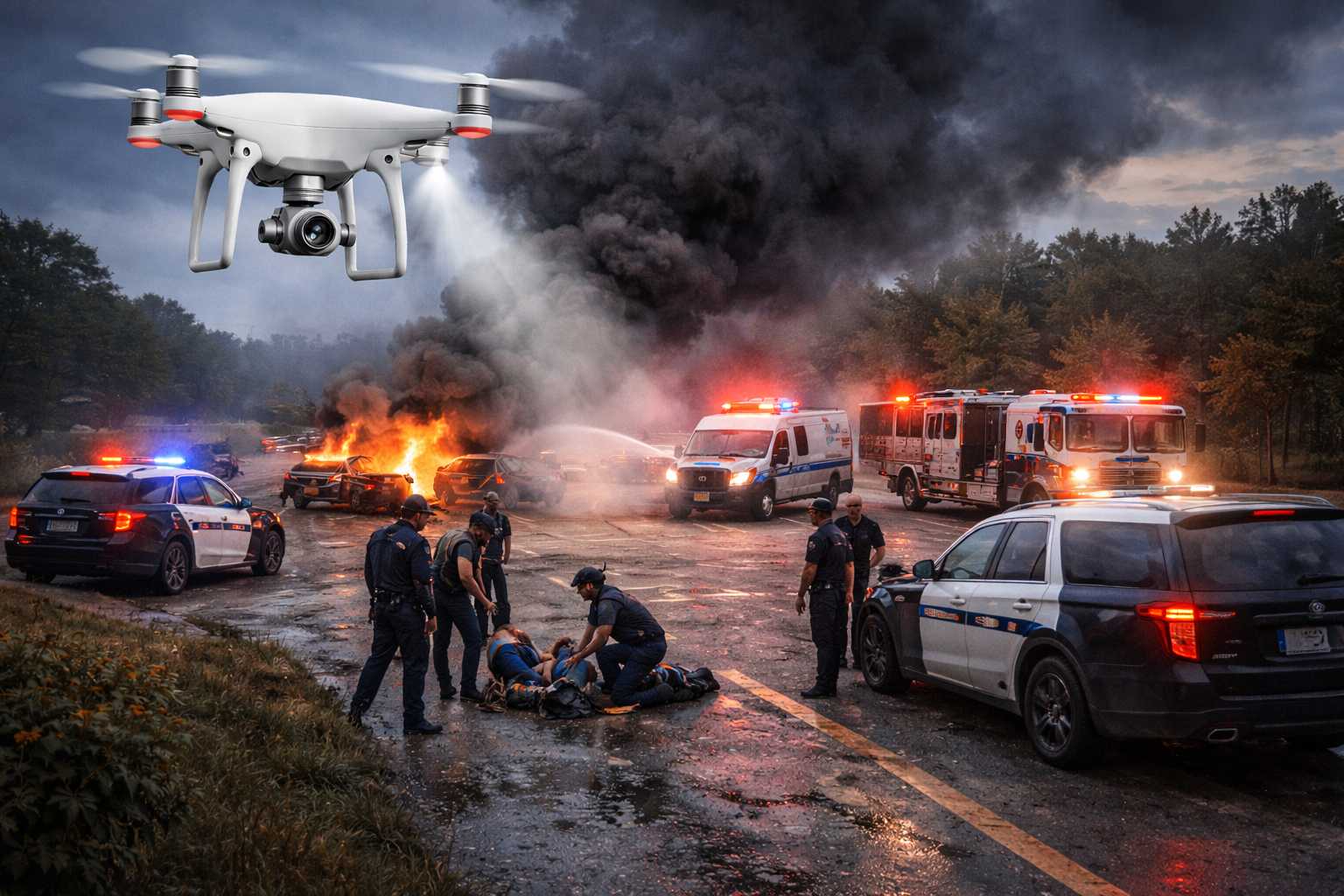
extending progress: why drone cameras belong with first responders
One logical next step in responder safety and situational awareness is the expanded, responsible use of drone-mounted camera systems.
Drone cameras can assist first responders by:
-
Assessing the type of emergency before personnel enter danger
-
Evaluating seriousness and scale in real time
-
Identifying hazards and safe approach routes
-
Reducing unnecessary exposure to active threats
-
Improving coordination between police, fire, EMS, and emergency management
Importantly, drones do not replace human judgment. They enhance it—providing better information before irreversible decisions are made.
technology as protection, not intrusion
The success of camera-assisted identification in this case highlights an important distinction:
-
Surveillance is passive and continuous
-
Emergency technology is situational, purposeful, and protective
When governed by clear policy and oversight, drone and camera systems function as life-saving infrastructure, not tools of intrusion.
what success looks like for ivmv
For iVoteMyVote, meaningful impact is measured not only in readership but in real-world engagement.
primary success benchmark
-
More than 100,000 site visits, as reported by Google Analytics
secondary impact signals
-
Contact from law-enforcement or emergency agencies
-
Media mentions or citations
-
Policy or municipal discussion
-
Practitioner feedback from first responders
-
Citizen outreach requesting follow-up or escalation
These signals help determine whether ideas should be expanded, preserved, or actively shared.
we welcome feedback and collaboration
iVoteMyVote believes public safety improves fastest when citizens, agencies, and civic organizations communicate openly.
If you represent—or wish to recommend—an organization involved in:
-
Law enforcement
-
Emergency response
-
Campus safety
-
Municipal governance
-
Public safety technology
we welcome your input.
📧 Please contact iVoteMyVote directly at: claude.tatro@gmail.com
When reaching out, please include:
-
Your organization or suggested recipient
-
Your role or interest
-
Whether follow-up from iVoteMyVote would be welcome
Our goal is to responsibly share ideas that protect lives and reduce risk.
The successful identification and apprehension in the Brown University case reflects professionalism, coordination, and progress. It also reminds us that preparation matters most before the next emergency, not after.
If better information can save lives—both civilian and responder—then it is a conversation worth advancing.
If you believe public safety deserves modern tools used responsibly, share this article, contact your local officials, and help iVoteMyVote move proven ideas forward.