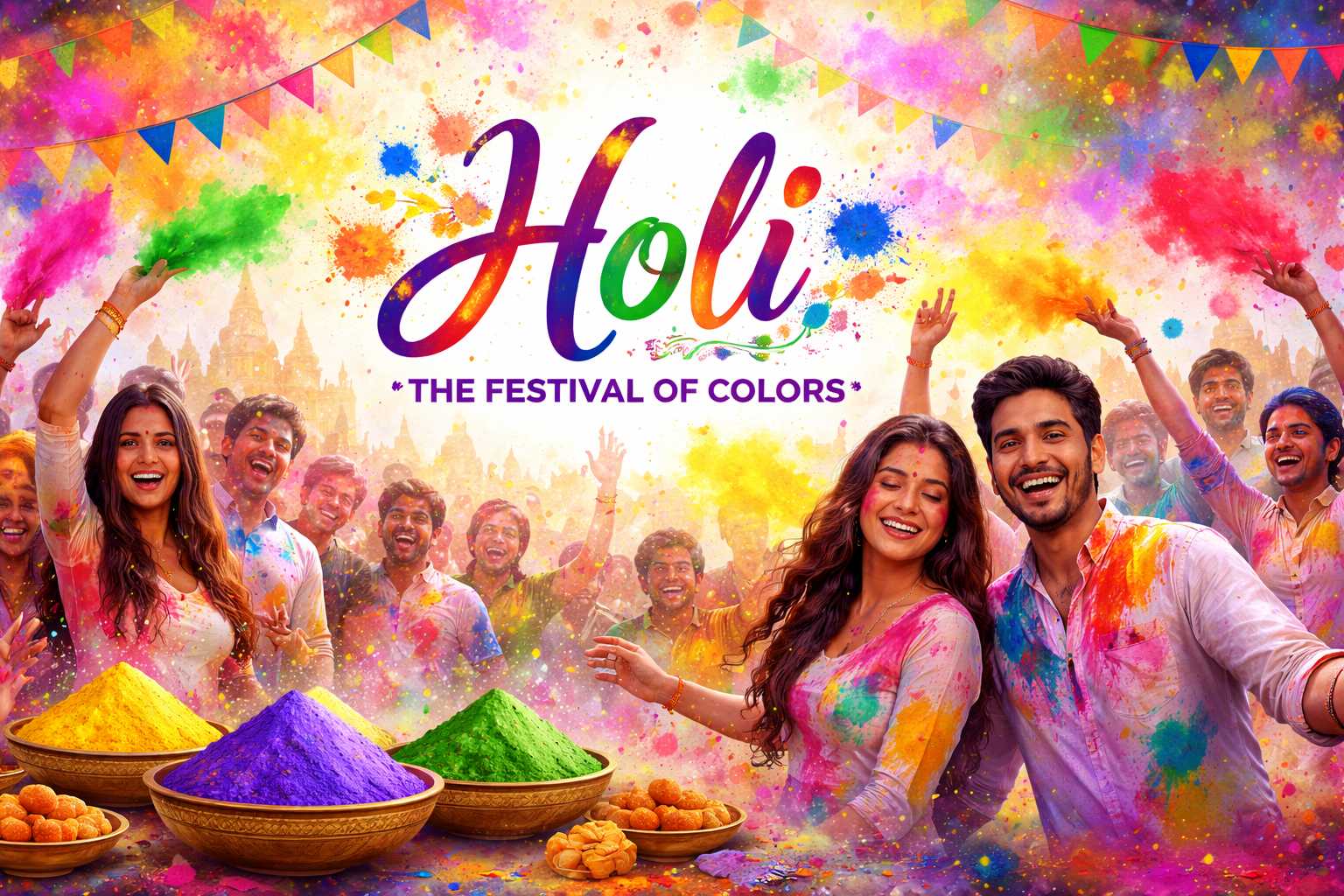
India is a country known for its deep traditions, rich culture, and vibrant festivals. Among all the celebrations, Holi – the Festival of Colors stands out as one of the most joyful and meaningful festivals. It is a time when streets fill with laughter, the air becomes colorful, and people come together to celebrate happiness and togetherness.
Holi is mainly celebrated in India and Nepal, but today its beauty has reached many parts of the world. Countries like the United States, Canada, United Kingdom, Australia, South Africa, and many European nations also celebrate Holi through cultural festivals and community events.
This festival represents love, unity, the victory of good over evil, and the arrival of spring. It also carries a powerful message for humanity: life becomes more beautiful when people come together with kindness and joy.
For people who are not familiar with Indian culture, Holi is a wonderful way to understand how traditions can bring people closer and spread positivity across the world.
The Historical and Mythological Story Behind Holi
Every great festival has a story, and Holi is deeply connected to one of the most powerful stories in Indian mythology — the story of Prahlad and Holika.
Long ago, there was a powerful king named Hiranyakashipu. He was extremely proud and believed that everyone in his kingdom should worship him as a god. However, his own son Prahlad was a devoted follower of Lord Vishnu and refused to worship his father.
This angered the king greatly. He tried many times to punish Prahlad for his devotion, but every attempt failed because Prahlad’s faith protected him.
Finally, the king asked his sister Holika to help him. Holika had a magical cloak that made her immune to fire. She sat with Prahlad in a large fire, believing that Prahlad would burn while she would remain safe.
But things did not happen as she expected.
Because Holika used her power for evil intentions, the magical protection failed. The cloak flew away from her and protected Prahlad instead. Holika was burned in the fire while Prahlad survived.
This moment became a symbol of the victory of good over evil and the power of faith and truth.
To remember this story, people celebrate Holika Dahan, where large bonfires are lit the night before Holi. These fires represent the burning away of negativity, ego, and evil thoughts.
The Celebration of Colors: A Day of Pure Joy
The day after Holika Dahan is the main celebration known as Rangwali Holi or the Festival of Colors.
On this day, people gather with family, friends, and communities to play with colorful powders called gulal and colored water. Streets become full of music, dancing, laughter, and joyful celebrations.
People apply colors on each other’s faces as a sign of love and friendship. It is common to hear the greeting:
“Bura na mano, Holi hai!”
which means “Don’t mind, it’s Holi!”
This phrase reflects the spirit of the festival — a time to forget differences, forgive past misunderstandings, and celebrate life together.
Traditional sweets such as gujiya, laddoos, and other festive foods are prepared in homes. Families visit relatives and friends, sharing happiness and warm wishes.
The colors used during Holi are not just playful decorations. They carry symbolic meaning:
-
Red represents love and energy
-
Yellow symbolizes happiness and prosperity
-
Green represents new beginnings and growth
-
Blue reflects calmness and strength
Together these colors reflect the diversity of human life and emotions.
Where Holi Is Celebrated
Holi is primarily celebrated in India, where different regions celebrate it with their own traditions and styles.
Some of the most famous Holi celebrations happen in:
-
Mathura and Vrindavan – known for traditional and spiritual Holi celebrations connected to Lord Krishna
-
Barsana – famous for the unique Lathmar Holi, where women playfully chase men with sticks
-
Jaipur and Udaipur – known for royal and cultural celebrations
-
Delhi and Mumbai – where modern celebrations and music festivals take place
Beyond India, Holi is now celebrated across the world. Large Holi festivals are organized in countries such as:
-
United States
-
Canada
-
United Kingdom
-
Australia
-
Singapore
-
South Africa
-
Netherlands and Germany
These events bring together people from different cultures who gather to enjoy music, colors, and Indian traditions.
For many international visitors, Holi becomes their first experience of Indian culture, and it leaves a lasting impression of joy and unity.
Why Sharing Holi With the World Matters
Holi is not just an Indian festival. Its message is universal and meaningful for everyone.
In today’s world, where people often feel divided by culture, religion, language, or nationality, Holi reminds us of something simple but powerful:
We are all human, and joy connects us all.
When people celebrate Holi together, they forget their differences. Everyone becomes equal when covered in colors.
Sharing Holi with the world helps people understand:
-
The beauty of Indian traditions
-
The importance of unity and acceptance
-
The power of celebrating diversity
Through festivals like Holi, cultures can connect and learn from each other.
This is why many cultural organizations, communities, and influencers are now helping to introduce Holi to global audiences.
The Life Lessons Hidden in Holi
Beyond the celebration, Holi also teaches meaningful life lessons.
Good Always Wins
The story of Prahlad reminds us that truth and goodness will always overcome evil.
Let Go of Negativity
The Holika bonfire symbolizes letting go of anger, ego, jealousy, and negative thoughts.
Celebrate Diversity
Just like the many colors of Holi, people from different cultures and backgrounds make the world more beautiful.
Forgive and Move Forward
Holi is the perfect time to forgive past mistakes and start fresh relationships.
Spread Happiness
Sometimes the smallest moments of laughter and celebration can bring people closer.
A Festival That Connects Cultures
As the world becomes more connected, festivals like Holi play an important role in building cultural understanding.
Through social media, travel, community events, and cultural festivals, Holi is now recognized as a global celebration of happiness.
Influencers, storytellers, and communities around the world are sharing the beauty of Holi with audiences who may never have experienced it before.
By learning about Holi, people also learn about the values of kindness, respect, and joy that are deeply rooted in Indian culture.
The True Spirit of Holi
Holi is more than colors, music, or celebration.
It is a reminder that life is meant to be joyful, relationships are meant to be cherished, and positivity should always be shared.
The colors of Holi symbolize the many experiences of life — happiness, hope, love, and renewal.
And when those colors come together, they create something beautiful.
Final Message: A Festival for Humanity
Whether you celebrate Holi in India, join a festival abroad, or simply learn about it for the first time, its message remains universal.
Holi encourages us to:
-
spread kindness
-
celebrate diversity
-
forgive the past
-
and welcome new beginnings with joy
In a world that often moves too fast, Holi invites everyone to pause for a moment, smile, and celebrate life.
Because at the end of the day, a little color, a little laughter, and a little kindness can brighten the entire world.